Skip to Main Content (Press Enter)

The Prius evolution

The Prius plug-in hybrid
The Prius PHEV, the plug-in version of our world-famous Prius hybrid vehicle, offers the best of EV driving for short distances with none of the range anxiety for long journeys.

  • Life cycling thinking

    At Toyota we are continuously taking measures to reduce the CO2 emissions, considering the entire life cycle of a vehicle: from design and production to use and finally to disposal and recycling phase. In order to measure the overall environmental impact of the Prius Plug-in Hybrid, a detailed LCA was carried out in accordance with ISO 14040/44. For the most efficient grade, fuel consumption is just 0.5 l/100 km and the combined CO2 emissions rating is an ultra-low 11 g/km, according to WLTP test standard.

Increased efficiency

Prius Plug-in Hybrid combines the strengths of advanced hybrid technology with the benefits of extended electric driving. The vehicle offers uprated eco-driving assistance to help you get the most kilometres out of your tank.  Additional electrified* power can be generated cleanly by optional solar cells on the roof, to help charge the new Prius when it is parked outdoors in sunlight. The roof is smaller than before, but thanks to new solar cells, the overall efficiency has been improved.

*An electrified car is one propelled by an electric motor to some extent. Some electrified cars are entirely electric. Others, including Hybrids and Plug-in Hybrids, also have a petrol engine. 

It starts at the plant

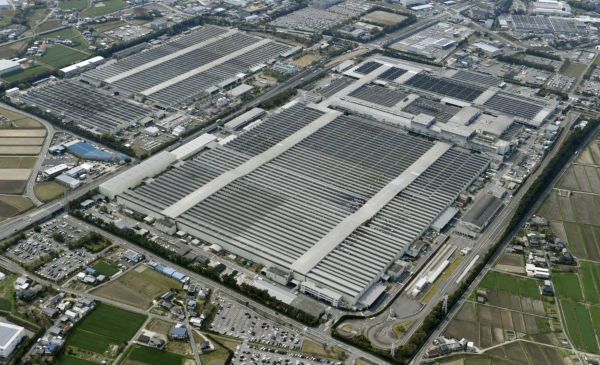
The Tsutsumi plant in Japan, where the Prius PHEV is manufactured, is continuously implementing innovative solutions to improve efficiency. It has developed new technology in the painting process to reduce CO2 emissions in production and installed a 2,000 kW photovoltaic system which provides energy comparable to the power usage for some 500 households. The plant has also introduced more stringent water standards.

Fostering nature

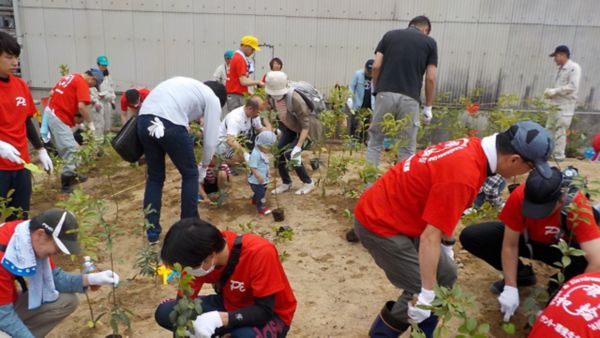
Tree-planting activities began at the new Prius PHEV production plants in 2008 with the motto 'Make our plant rich in trees!'. A total of 5,000 people including employees, their families, and members of the community are making strides toward planting 50,000 trees, including conducting research on indigenous tree species and growing saplings from seeds.