Quality: a never-ending mission
We listen to our customers as well as our employees to make improvements and produce ever-better cars. Customer feedback, both positive and negative, tells us if we’re meeting our quality goals — or not. Internally, we follow the Jikotei Kanketsu philosophy, “to ensure that defects are never passed on to the next process.” This means that everyone who works for us is committed to tackling issues the moment they arise. We use the “ask why five times” technique to get to the root cause of every problem, helping us achieve our ultimate aim of zero defects in all our production processes.
What is Kaizen?
Kaizen is one of the core principles of the Toyota Production System. In English, ‘Kai’ means ‘change’ and ‘zen’ means ‘for the better’. This philosophy of continuous improvement helps to ensure maximum quality, minimum waste, and better overall efficiency.
Our pioneering way of working
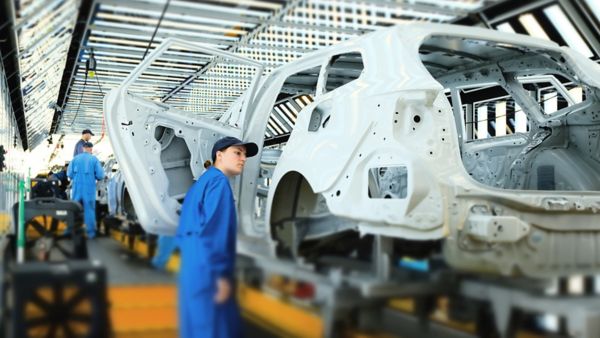
Our manufacturing philosophy is based on two key concepts: Jidoka and Just-in time. Jidoka (Japanese for “automation with a human touch”) is a way of and empowering employees to spot problems and take prompt action to correct them. Just-in-time means that every stage of production makes only what is needed, when it is needed, and in the quantity needed. When used together, these concepts deliver a highly productive, low-waste system that delivers consistently high-quality products. This Toyota Production System (TPS) performs so well that we even use it in our offices, making work easier, less burdensome, and more meaningful.
Proactive problem prevention
Our “Design Review Based on Failure Mode” (DRBFM) methodology proactively prevents serious problems. Designers focus on areas of change, pinpointing potential problems, then apply their experience to design solutions, which are reviewed by experts and specialists.
Quality everywhere, in everything
From design, development and production through to customer use, our ideals and pride in our manufacturing ensure we make high-quality vehicles that last a long time. Starting with the initial design process, we focus on identifying and addressing potential problems, to prevent more serious and harder-to-fix issues occurring closer to production. And before we deliver our vehicles into our customers’ hands, we put them through a rigorous testing process that includes both lab modelling and thousands of kilometres of real-world driving, in extreme conditions. We believe that this holistic approach ensures high quality all the way from concept to customer.