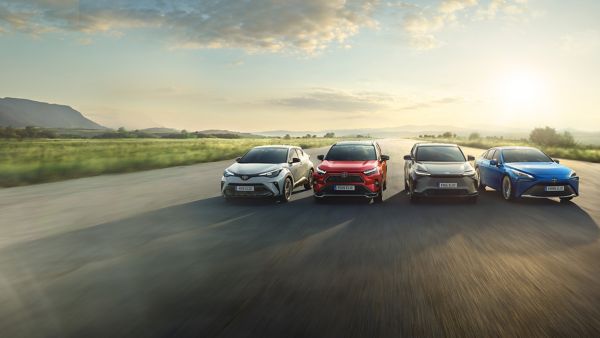
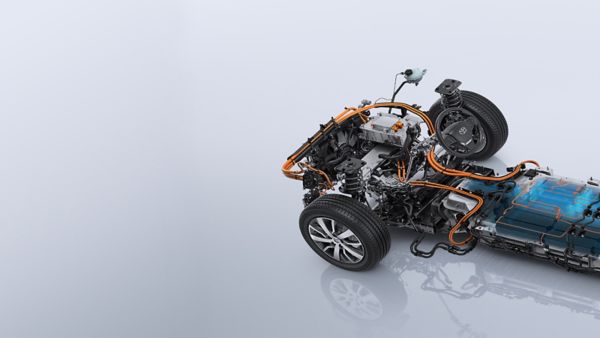
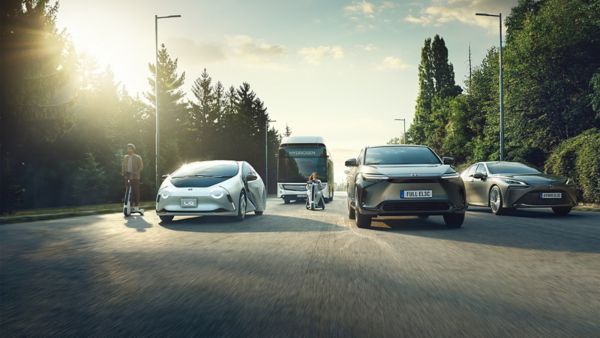
Innovating in order to enhance the quality of people’s lives and provide all kinds of solutions related to people's mobility – this is what Toyota aims for while becoming a mobility company.

Innovating in order to enhance the quality of people’s lives and provide all kinds of solutions related to people's mobility – this is what Toyota aims for while becoming a mobility company.
We constantly pursue the safest, most convenient, inclusive, and sustainable mobility. Our innovations enhance vehicle safety and the traffic environment, integrating automated driving to protect everyone, with a goal of Zero Accidents. We believe in unrestricted freedom of movement.
Through our KINTO mobility service, we offer diverse solutions, from personal vehicles for wheelchair users to last-mile devices. Our robots support autonomy and assist in challenging situations, ensuring mobility for all.
To achieve the goal of a carbon neutral society, we believe that hydrogen is one of the key building blocks to reduce CO2 emissions. Our commitment goes far beyond cars. We have re-packaged Mirai’s fuel cell technology in our compact fuel cell modules, which are already being used in a variety of applications such as buses, trucks, and boats.
All these examples show what hydrogen can practically achieve today. By implementing hydrogen technology solutions in a wide range of applications, we support the creation of a hydrogen ecosystem – a ‘living oasis’ where supply and demand meet to further grow.